Portfolio Summary - Polaris Private Equity
The work with sustainability at portfolio level
The work with sustainability throughout Polaris’ private equity portfolio is aligned with Polaris Sustainability Program, either through a direct implementation of the program together with Polaris recommended advisors or through comparable and fundamentally aligned processes, yielding similar outcomes and including the same mandatory components. We aim to implement this structure as soon as practically possible and preferably within 12 months after the closing of an acquisition. For the program to be successful and drive real change it is however critical that the project is firmly anchored in the management team and Board of Directors and can be supported by sufficient resources and a sustainability responsible in the company. The implementation of the program might therefor sometimes need to be postponed beyond our target of 12 months until these factors are in place.
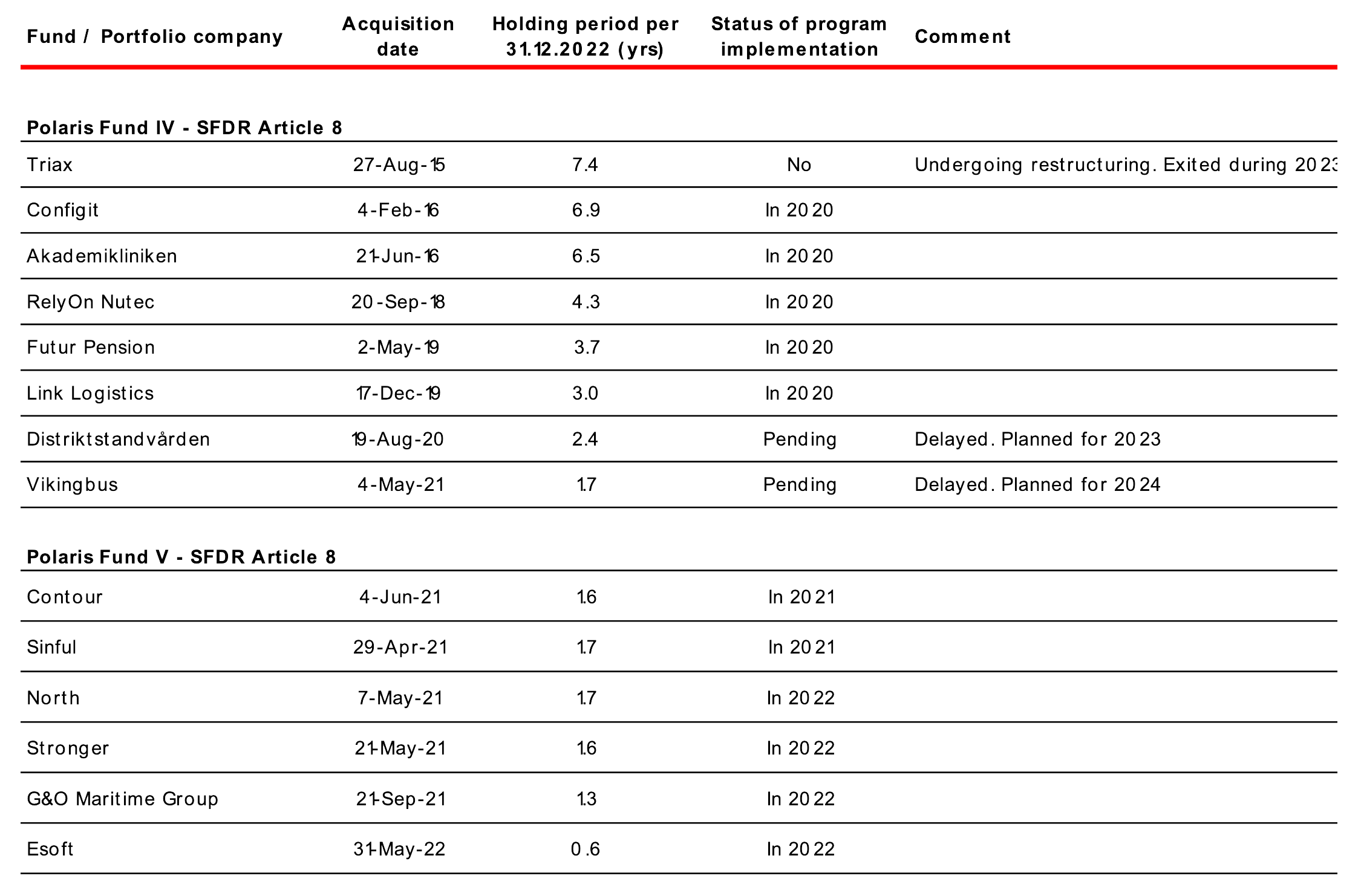
As Polaris Sustainability Program was launched during 2020, we are still working to include all our private equity portfolio companies and at the end of 2022, eleven of our fourteen private equity investments had implemented the program.
Portfolio company impact on the Sustainable Development Goals - the SDGs
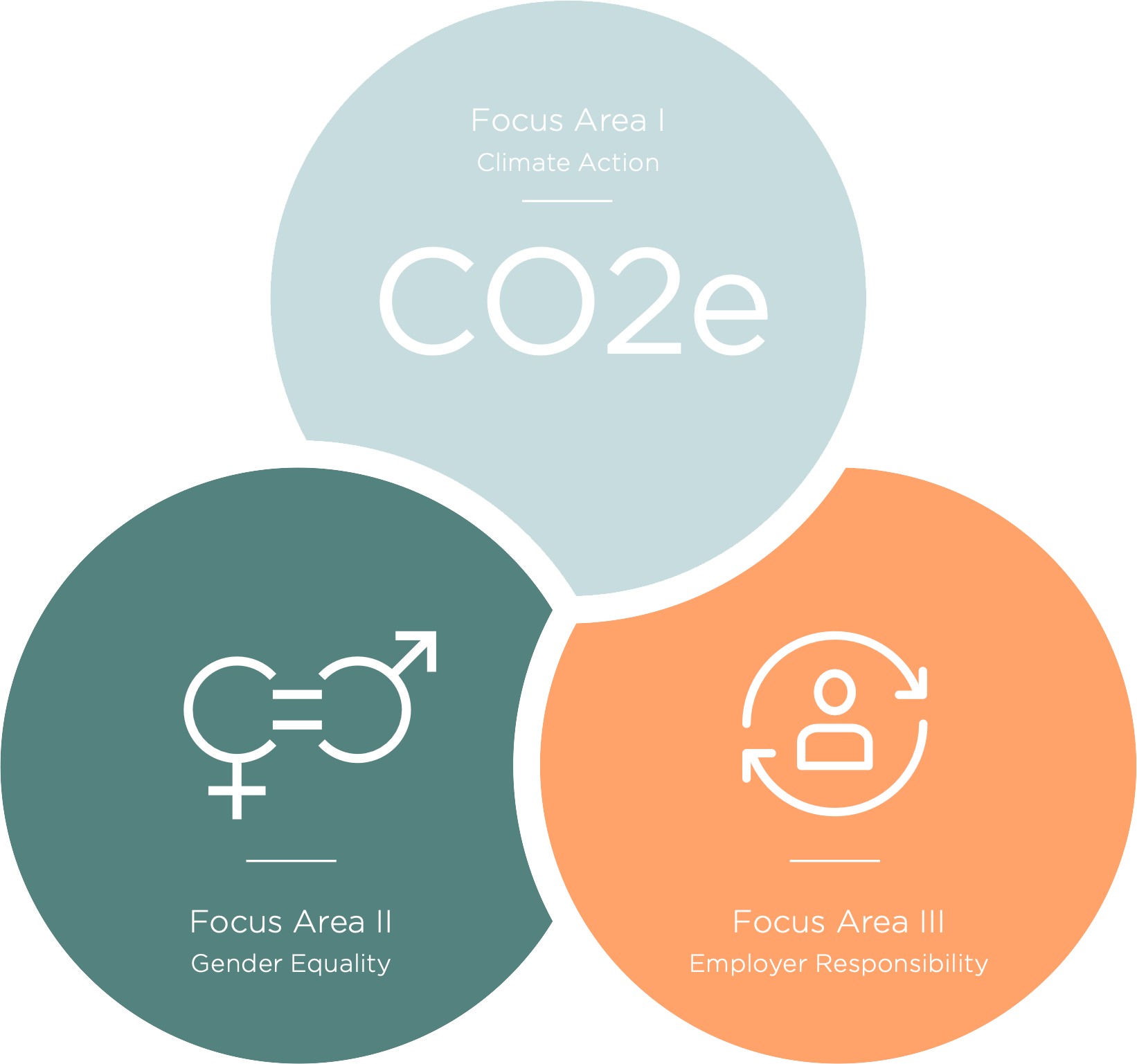
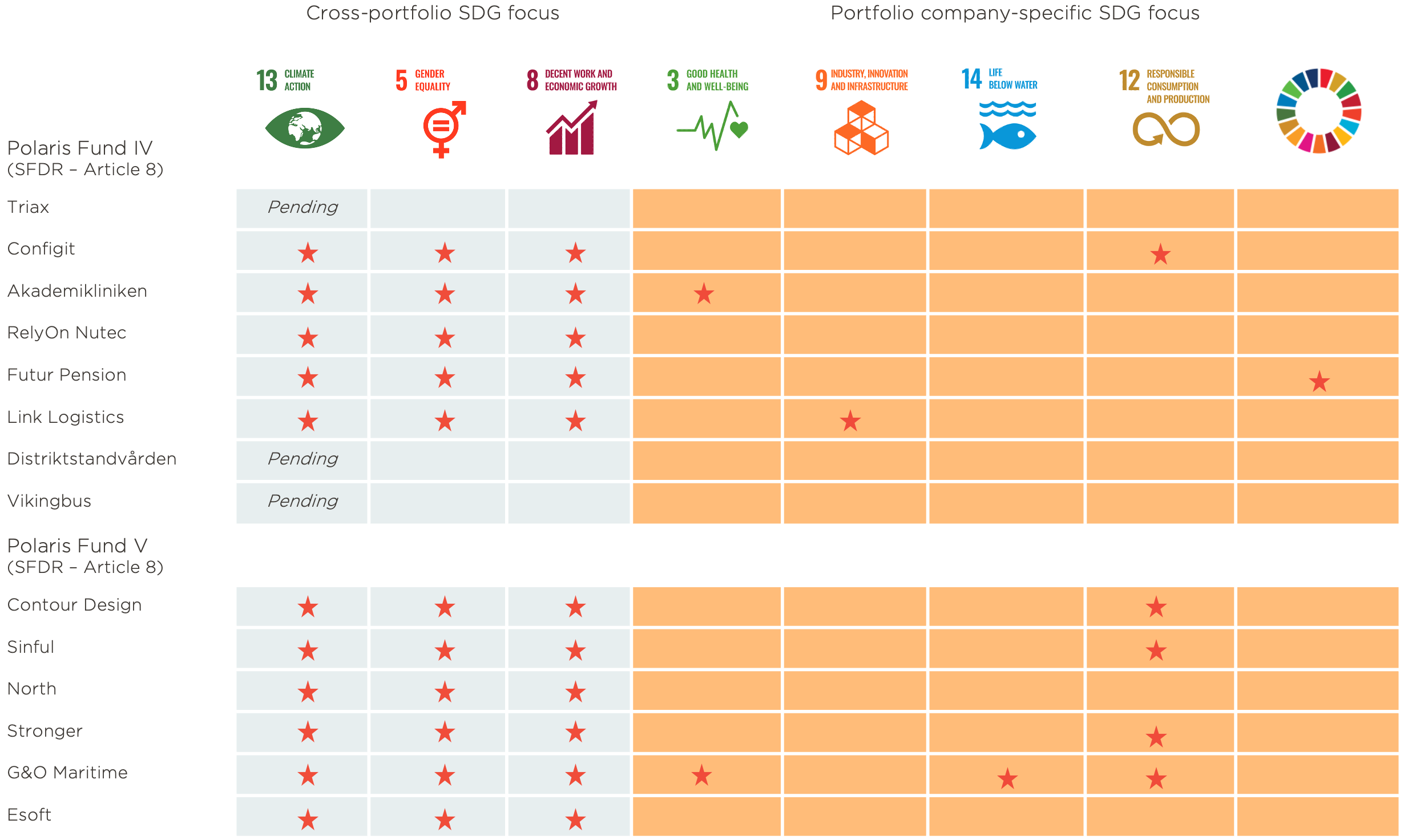
Our work with mapping the portfolio companies’ impacts, positive as well as negative, to the SDGs is used as a way to prioritize, focus our actions and communicate on progress. As mentioned earlier we have chosen to focus especially on three SDGs that we work with and report on across all portfolio companies: Climate Action, Gender Equality and Employer Responsibility.
Implementation status of Polaris Sustainability Program
Climate Action in Polaris’ portfolio
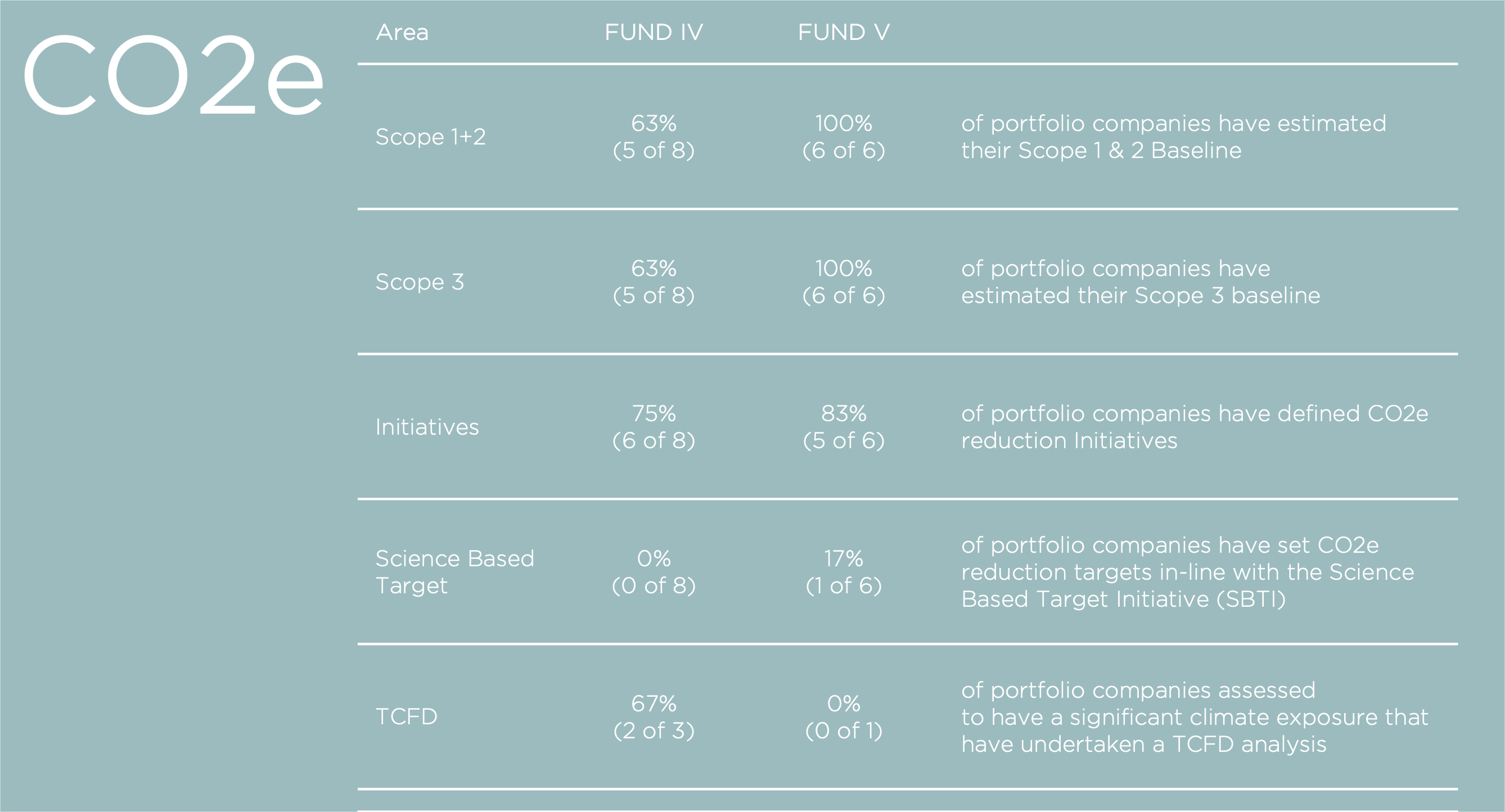
Our focus on Climate Action is based on measuring and tracking the CO2e emissions of our portfolio companies on an annual basis. By doing this we create transparency and ensure that the footprint of the portfolio companies can be addressed, and our portfolio companies actively can work towards reducing their CO2e through identification and implementation of relevant reduction initiatives. We are encouraging and supporting our companies to set reduction targets in-line with the Paris Agreement through Science Based Targets approved by the Science Based Target Initiative (SBTI)
Climate action
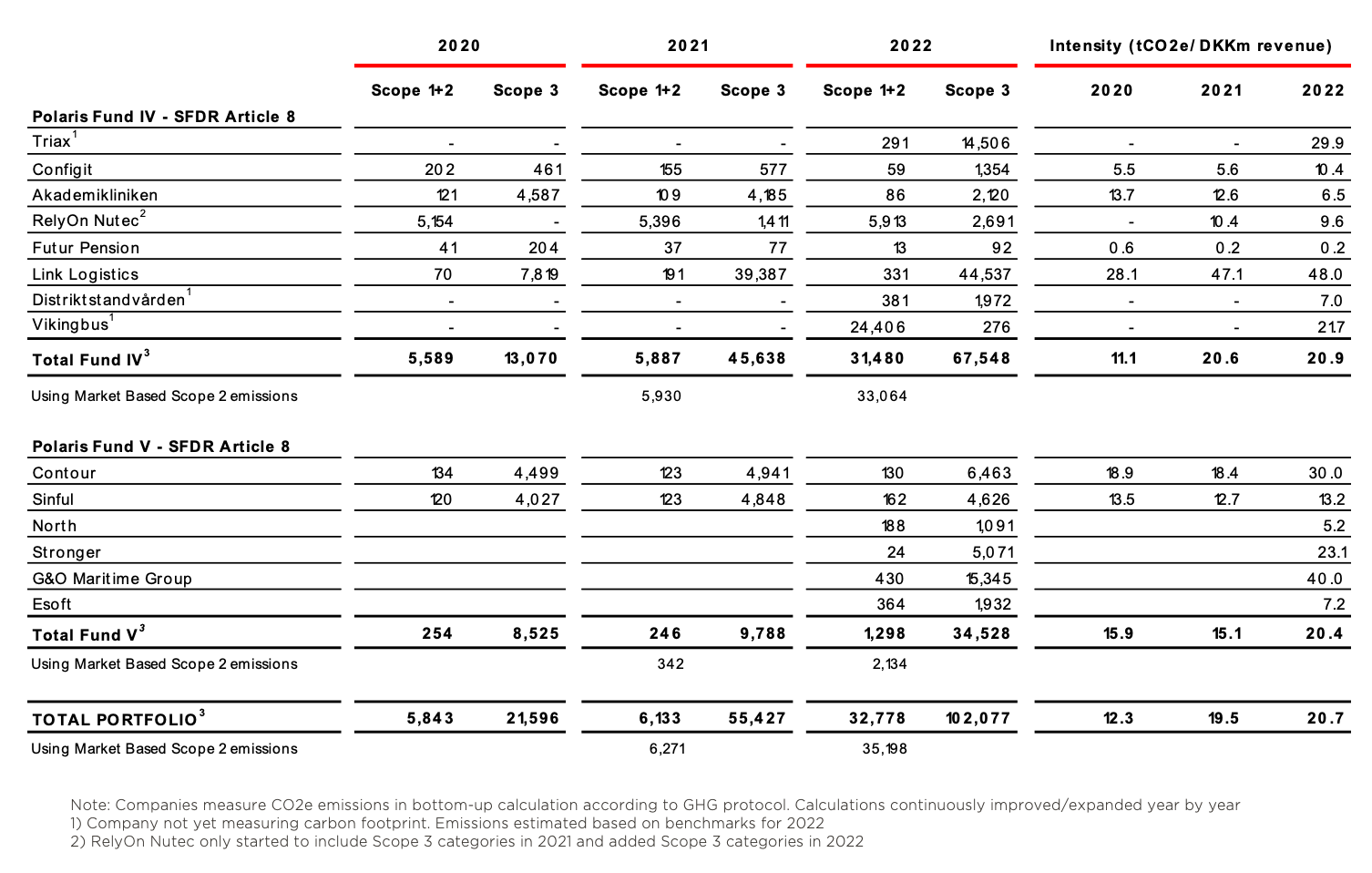
Several new portfolio companies were onboarded during the year and now most of our portfolio companies measure their CO2e emissions on Scope 1,2 and 3 in a thorough bottom-up process and reported their emissions for the year 2022. We continue to believe that this is a necessary foundation to understand your emissions and enable the right initiatives to reduce them. We expect that the companies which do currently not measure their CO2e emissions will do so in the near future. As the measurements are developing and improving in our companies and many have just made their first measurements, it is not yet possible to establish the development of our companies emissions in a meaningful way. We expect this to start to be possible as we move forward.
For the companies not yet reporting on their emissions, we this year made estimates to be able to report on the complete emissions from our private equity investments. The overview below shows that our emissions primarily are generated by our investments in the transportation sector (Link Logistics, Vikingbus) which constituted 52% of total emissions in 2022 while our product-companies generated 35% of our emissions in the period (Triax, Contour, Sinful, Stronger and G&O Maritime). The remaining service businesses only generated a total of 14% of our total emissions in the period. We expect to continue to invest in businesses with a large range of CO2e emission intensities and we will not exclude companies with high emissions on principle as long as we believe it can be responsibly managed and we can support decarbonization. Climate impact, carbon emissions and decarbonization will therefor continue to be an important part of our due diligence process.
During 2022, Contour Design became our first portfolio company to have their Science Based Target approved by the Science Based Target Initiative (SBTI) and we expect more companies to follow. Among them, our largest emitter Link Logistics. We will continue to support our portfolio companies on their journey to reduce their climate impact and set Science Based Targets for their reduction efforts.
Table overview of all absolute emissions (tCO2e)
Gender Equality in Polaris’ portfolio
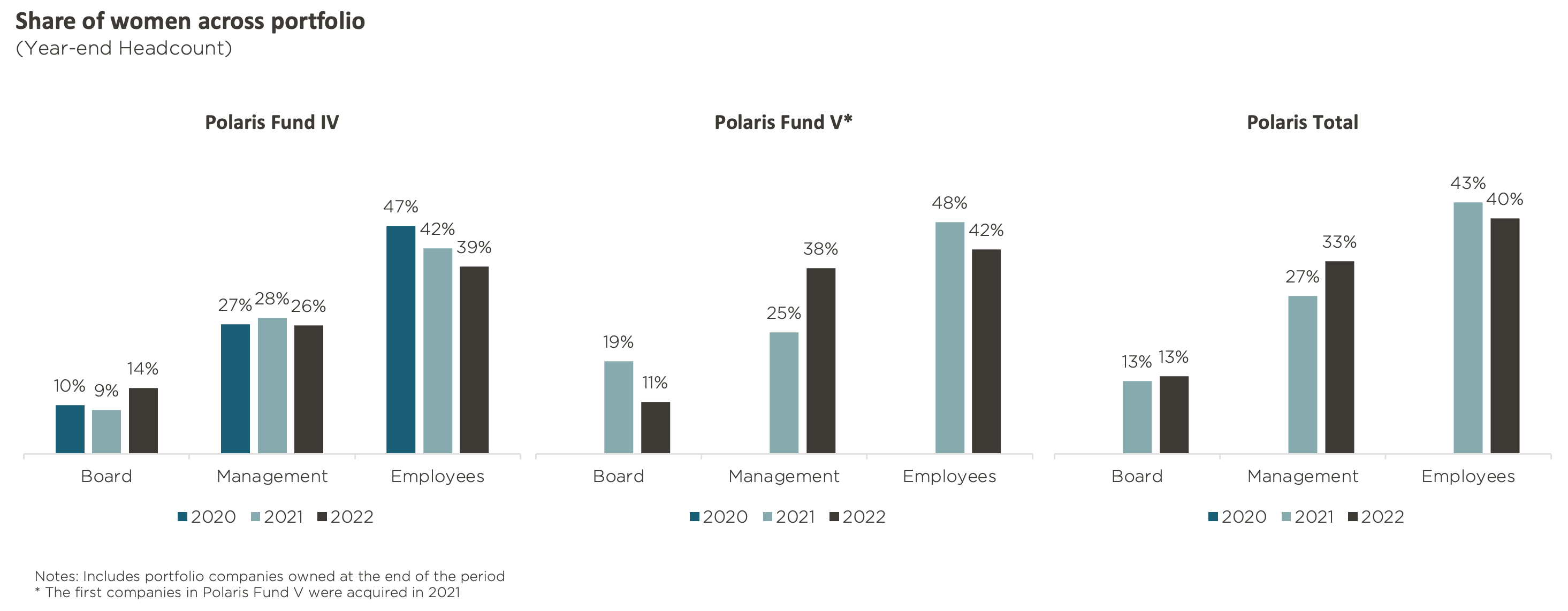
With Gender Equality as a focus area for our work, the share of women on board, management and employee level has been chosen as a cross-portfolio KPI for Polaris. Thus, all portfolio companies are reporting annually on the gender balance across their organization and Polaris will report on this KPI for the portfolio as a whole. The metric measured is share of women across the portfolio companies, and the work is focused on ensuring a balanced workforce and increase the share of the underrepresented gender.

Gender equality
During the year, more and more of our companies established strategies, targets and initiatives to support gender equality and work towards our ambition to reach a 40/60 gender balance across our portfolio for management teams and boards. At the board level, some improvements were made but were countered by some negative developments. We do however expect this to improve in 2023 as we continue to focus on this area in Polaris. Some improvements were made towards improving the gender balance in the management teams. A majority of our companies improved during the year and the share of female management team members increased from 27% to 33%. We still have a long-way to go and will continue to support further improvements as we move forward. As of 2022, we have also started to gather additional indicators related to gender equality and diverisy and inclusion, hereunder unadjusted gender pay-gap, which should further support transparency, understanding and improvements in the area.
Employer Responsibility in Polaris’ portfolio
Being good employers through respect for and protection of labor rights and providing safe, secure and healthy working environments for all employees is not only the right thing to do, but also key to value creation in our portfolio companies as it supports attraction and retention of talents and resources.
Employee turnover
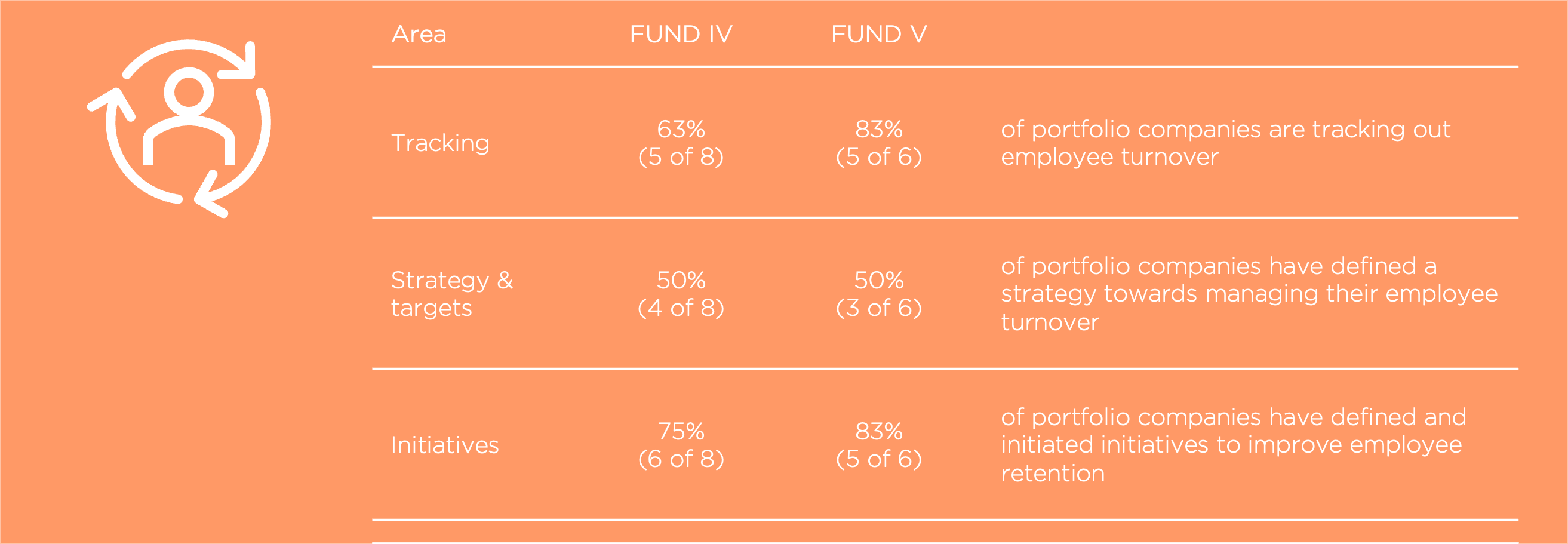
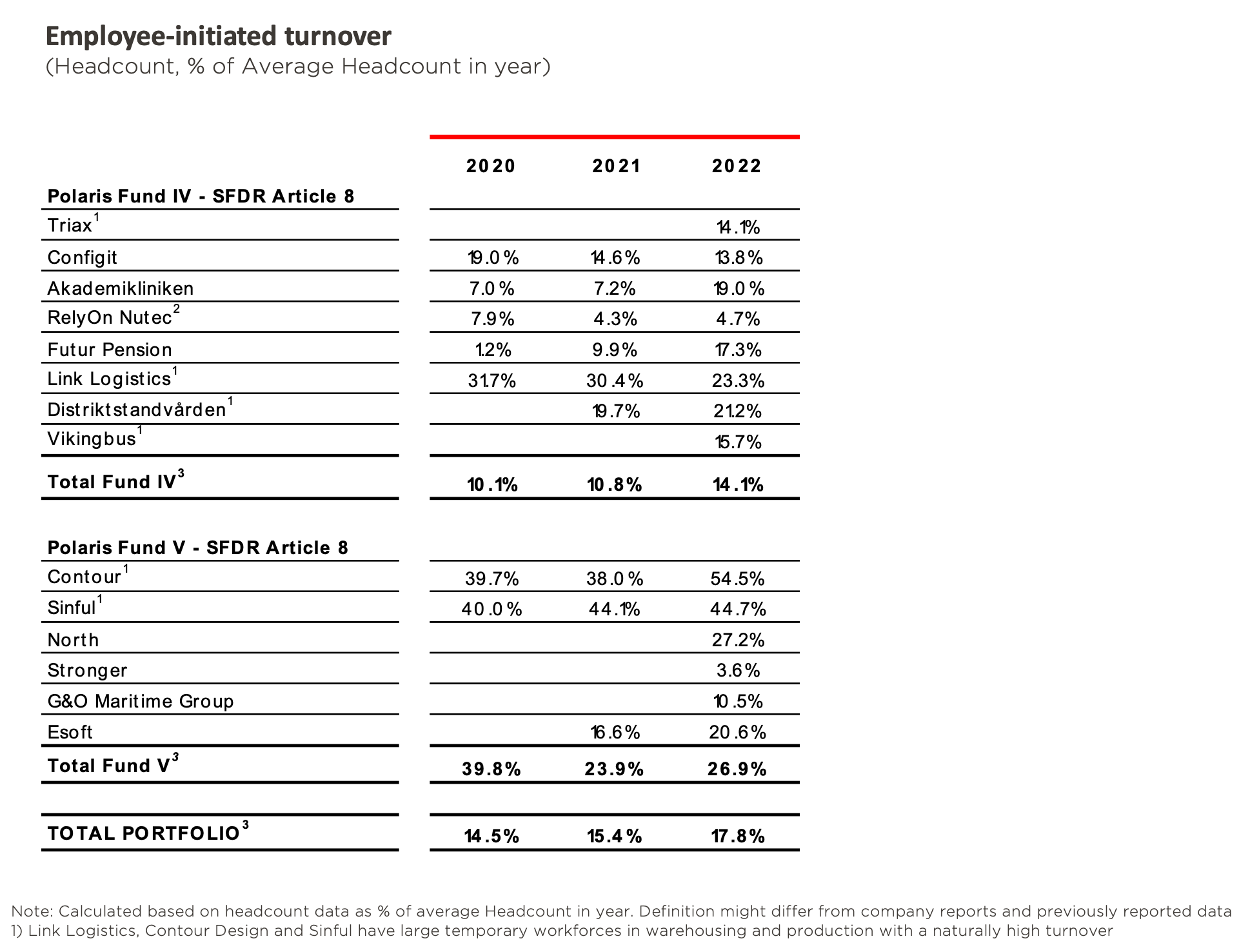
All Polaris' private equity portfolio companies focus on creating a good and safe working environment for their employees. Measuring and monitoring their Employee-initiated employee turnover is a part of this work which is often complemented by a range of other measures. For the year 2022, we also started to gather data on additional indicators in this area, such as employee satisfaction, absenteisme, accidents among others. As these measurements mature, some might also be included in future reporting.
We continue to see a large variance in the employee turnover throughout our portfolio due to structural differences between our portfolio companies. Link Logistics, Contour and Sinful with large groups of temporary employees in manufacturing and warehousing continue to report a structurally high turnover. During the year, both Akademikliniken and Futur Pension reported an increased turnover in the period which was linked to organizational developments in each company and is well understood and managed by the respective organization. Overall, we are confident that the employee turnover is managed responsibly by each portfolio company and we will continue to support them in this effort.
Overview of portfolio impact on the SDGs
As part of Polaris Sustainability Program, our portfolio companies map their material positive and negative impacts of our portfolio related to the UN’s Sustainable Development Goals (SDGs). All impacts to the SDGs have been linked to the sub-goals and related business actions formulated by the Global Reporting Initiative (GRI) to make this work as concrete and actionable as possible. Subsequently the portfolio companies have formulated initiatives to increase positive and minimize negative impacts.
Portfolio company sustainability reporting







- Fund IV: Five of eight companies publish sustainability reports. Triax, Distriktstandvården and Vikingbus do not yet publish reports. Configit and Futur published reports for 2021 and plan to publish the next report for 2023.
- Fund V: Four of six companies publish sustainability reports. North and Esoft do not yet publish reports.
Our Scope
We are applying our sustainability strategy for all our private equity investments in all active funds in this strategy, Fund IV and V. These two funds constituted 96% of our total invested capital in Polaris and included fourteen portfolio companies at the end of 2022. This includes all companies acquired by Polaris Private Equity that remained in our ownership at the end of the period, of which the earliest was acquired in 2015.
We align our work with established standards and frameworks.
Our sustainability program is based on international standards and frameworks to ensure that the way we work and report is in alignment with best practices in the field. By this we also seek to support quantitative and concrete approaches with a focus on materiality. The standards and frameworks used are described throughout this section along with how the work is conducted.
Methodology for CO2e accounting
Process
Our efforts of calculating CO2e baselines for our private equity portfolio companies and Polaris Management A/S were initiated in 2020. Our standard process is supported by external advisors and the calculations are made according to the Greenhouse Gas (GHG) Protocoll and are built as line-by-line bottom-up exercises which we believe is necessary to properly support reduction initiatives and build understanding and ownership of the estimates in the organisations. At any given time, some of our portfolio companies might not yet have been onboarded onto our CO2e emissions calculation process. In order to be able to provide an estimate of the complete emissions for our private equity funds, we estimate the emissions of these companies with the help of external benchmarks. We are also continously working to onboard new companies that have not yet measured their CO2e emissions and our ambition is to complete this within the first twelve months after closing.
Boundary setting and consolidation approach
For the organizational boundary setting, Polaris uses the 'Operational Control' approach. We do this because our investment strategy typically includes us exercising majority control through taking majority ownership. In doing so we acknowledge that we have the mandate to introduce and implement operating policies in our portfolio companies, and we therefore also take full responsibility for the emissions thereof in our CO2e baseline. Although we do not technically have majority ownership in all portfolio companies, the consolidation approach is taken for all portfolio companies, acknowledging the influence we have across all the companies, nonetheless.
Consequently, when consolidating CO2e emissions, we include Polaris Management’s emissions and we also account for our portfolio companies’ emissions.
Quality and comparability
While emissions are consolidated across-portfolio companies to estimate the full Polaris emissions (including Polaris Management and all portfolio companies), we acknowledge that the baselines individually are not directly comparable.
For the companies that have been through our process, these may still vary greatly with respect to complexity, both with regard to the type of operations, but also with regards to procurement and reporting being more decentralized in some companies compared to others. This means that the data available for some companies may not be as readily available for others, why the same activity may have been estimated with a different calculation method across- portfolio companies, or may not have been included in the base year for some companies due to lack of available data. While these portfolio companies have defined their own organizational boundaries, to ensure it reflects their operations and business model, all companies have selected the operational control approach. They have also gone through all the Scopes and categories of the GHG Protocol and assessed their relevance and feasibility based on the principles of relevance, completeness, accuracy, consistency, and transparency.
In our process, the CO2e emissions have been calculated through a combination of calculation approaches, hereunder the activity-based method (based on activity data such as total weight of a product, total passenger-kilometers flown or other relevant metrics), the spend-based method (based on spend on a specific activity or category) and the supplier-specific method (based on actual emissions per SKU or supplier provided data).
Each baselining process has been initiated with establishing a spend-based baseline, which has been used to prioritize further data collection efforts with the aim of increasing accuracy through moving towards more detailed calculation methods.
Data has been extracted from the respective ERP-systems, invoices and collected from key suppliers when relevant (especially purchased energy services, logistics services, waste management services etc.). Where data for applying these methods have not been available, emissions for selected categories have been estimated based on proxy data. For example, for selected portfolio companies, where actual energy consumption was not available, the energy consumption has been estimated based on the size of facilities and average annual national energy consumption per square meter for a specific facility type (such as office spaces).
Similarly, emissions from employee commuting have been based on central assumptions, publicly available data on local commuting patterns and in some cases on company specific employee survey data.
CO2e intensity is calculated based on revenue when consolidating the baseline across-portfolio companies or otherwise in accordance with industry standards on portfolio company level to allow for comparisons against competition to the greatest extent possible – knowing that a complete “apples to apples” comparison is not possible due to differences in especially Scope 3 coverage and methodology between different companies.
CO2e intensity and totals are calculated as the total of Scope 1, Scope 2 (location-based) and Scope 3 emissions. Polaris has chosen the location-based approach as the main approach in alignment with the GHG Protocol’s guidance. If any companies purchase energy attribute certificates it will be accounted for in the market-based emission calculations, which is also communicated in this report in alignment with the dual Scope 2 reporting requirement.
For each portfolio company that have completed our standard process, the baselining process has been concluded with the development of a CO2e road map. We acknowledge that the quality of each companies' baseline will improve over time and there will be uncertainties and gaps in the baseline due to lack of sufficient data. We strive to have more and more complete and accurate GHG inventories over time, and so, the roadmap includes plans for improving the breadth and depth of the data gathered in the coming years. This includes integrating categories that have been deemed to be significant in terms of the size of emissions, but where sufficient data is not yet available.
Further, the road maps include a plan for the initiatives that are to be launched to reduce CO2e emissions. At Polaris we request that the road map, together with the baseline itself, is approved by the Board of Directors of the portfolio company to ensure commitment to and accountability of the efforts planed. We encourage and support our portfolio companies to set reduction targets in-line with, and approved by, the Science Based Target Initiative (SBTI).
Emission factors have been collected via supplier specific environmental product declarations (EPDs), research-based Life-Cycle-Analyses (LCAs), from the UK Department for Environment, Food & Rural Affairs (DEFRA), International Energy Agency (IEA) or otherwise known and qualified emission factor databases. To the extent possible we have gathered multiple datapoints for each emission factor to validate the sources used.
When working with the spend-based DEFRA database the following steps have been taken to adjust for VAT, inflation (since the DEFRA database is from 2011) and currency: 1. Exclude VAT from the DEFRA factor, 2. Converted from GBP to local currency (exchange rate in the year of the emissions factor) and 3. Adjust for inflation based on local inflation rates.
For Scope 2 electricity calculations, for Danish electricity consumption we have used Energinet’s (the Danish Transmission System Operator) emission factor based on consumed electricity from the grid, while we for all other countries have used IEA’s database and emission factors for produced electricity within the respective countries. The decision to select a more accurate emission factor for Denmark is driven by the fact that most portfolio companies have facilities located in Denmark, and as such we see it as a means to improve the accuracy of the GHG inventory across the portfolio.
We calculate our CO2e emissions on Scope 2 using the 'Location-based' approach but also disclose the results based on a 'Market-based' approach.
- Scope 2 (location-based) approach is calculated based on average emission factors for each country
- Scope 2 (market-based) approach takes the green power purchased into account and assumes that the non-green power is delivered as residual power where the green part has been taken out
At Polaris we recognise that we will continuously improve our understanding of our emissions and we will over time both refine and adjust our Scope and calculation method to increase the accuracy of our calculations and in turn our CO2e baseline. Furthermore, given the nature of our operations, the composition of our portfolio will change over time as new companies are acquired and current companies are exited. As such, we have defined a recalculation policy in line with the GHG Protocol.
The Recalculation Policy states that, in the case of structural changes, for example, acquisitions, divestments, mergers, outsourcing or insourcing, we will clearly indicate in the report added or subtracted parts of the baseline, which can then not be used for year-on-year comparisons. The same applies to the inclusion of more Scope 3 categories. In the case of methodological change, for example, a change in emission factors, data accuracy, discovery of a significant error (or similarly, a number of cumulative errors that collectively have a significant impact on the CO2e baseline), it will trigger a recalculation of the previous 2-3 years to ensure CO2e baselines are comparable over time.
Sustainability KPI identification
Core sustainability KPIs
Three core sustainability KPIs have been selected and will be reported on across portfolio companies following SASB standard reporting practices (please see below section for more information on SASB). The Core sustainability KPIs are:
Company specific sustainability KPIs
Each portfolio company should select at least three company specific sustainability KPIs that are relevant for their business and their material impacts. The primary concern is to identify an indicator which is the most relevant for the specific company but if possible, we aim to use indicators defined by the SASB standard reporting practices.
The sustainability accounting standards boards' (SASB) materiality map
is based on studies of 77 industries and more than 4000 cases to identify relevant disclosure topics across different industries and sectors.
To ensure that we measure sustainability in a manner that is material, manageable and relevant to the individual portfolio company, and acknowledging that our portfolio is very diverse, each company goes through a process to select, at least, three sustainability KPIs that are specific for their company in addition to the three core sustainability KPIs.
A key priority during this process has been to ensure relevance and materiality in the KPIs selected based on the industry of the specific portfolio company. As a starting point, the KPI selection process includes a review of relevant SASB’s materiality maps.
The SASB materiality maps have been chosen as the starting point for this process since it is a broadly accepted and well-founded standard to guide the disclosure of financially material sustainability information by companies to their investors. The approach is focused on identifying quantitative and qualitative measures that are likely to impact a company’s financial performance and at the same time provides an industry-specific lens in recognition of the fact that the issues most likely to impact financial performance vary by industry. The SASB standard can therefore provide us with market-informed material sustainability measures, but also help us increase sustainability transparency towards our investors and future owners of our portfolio companies.
In some cases, we have adapted the SASB KPIs to better reflect the reality of the specific companies operations and adjusted the KPIs to a Nordic context rather than the American context in which the SASB materiality map is originally developed. If we are not able to indentify a suitable SASB KPI, we try to align with other standards such as the Global Reporting Initiative (GRI) or indicators embedded in the new EU regulations: SFDR and CSRD. We will in the end prioritise materiality and relevance from the companies perspective and it might therefor in some cases be necessary to structure proprietary indicators.
All portfolio companies are tasked with setting targets for the cross-portfolio sustainability KPIs as well as for the company-specific KPIs. Some portfolio companies have completed this process already while other are still in the process of developing the initiatives associated with their efforts to improve on the KPIs, why target setting is still an ongoing process.
Business reporting on the SDGs: An analysis of goals and targets
is a report developed in a partnership between Global Reporting Initiative (GRI) and the UN Global Compact with technical and strategic support provided by PwC. The report consolidates guidance on how businesses can contribute to the SDGs by providing an illustrative list of possible actions that businesses can take to
make progress towards the individual sub-targets.
Our contribution to the UN Sustainable Development Goals
The UN Sustainable Development Goals (SDGs) provide a framework for informing and communicating our work with sustainability. We use the SDGs as a way of creating transparency around our positive and negative impacts and how we are working with these. All portfolio companies have gone through a process to identify their significant contributions to the SDGs. In this process both positive and negative impacts have been identified and discussed. It has been of high importance that the approach to working with the SDGs is as realistic, holistic and transparent as possible. We also want to ensure that we focus on both work towards increasing our positive impacts and on minimizing our negative impacts and being transparent in how we work towards doing so.
We are taking a conservative approach to working with the SDGs, meaning that we focus on and work with our material impact. Therefore we have encouraged our portfolio companies to rather focus on fewer SDGs and work more in depth with the areas of material impact, than falling for the temptation to claim positive impacts across a wide range of SDGs.
It is very important for us to be clear about the fact that even if a portfolio company is not fundamentally changing the world, we are taking responsibility for our negative impacts. We are focused on ensuring businesses are run in a sustainable way – both internally and externally. This realization is important and necessary for us and the portfolio companies to focus our efforts on the areas where we can achieve real impact and where it matters the most.
In order to link our work with the SDGs to actual initiatives and actions to the greatest extent possible, we have based our approach on Global Reporting Initiative’s (GRI) Business Reporting on the SDGs: An Analysis of Goals and Targets. As a consequence, the portfolio companies have addressed the sub-target level of the SDGs in their work. For the selected sub-targets we have assessed the associated business actions of the sub-targets in order to identify where the companies can have a real impact in line with these.
For each identified area of material impact we have identified the associated concrete initiatives that the portfolio companies have launched or will launch to increase their positive impacts or minimize their negative impacts. These initiatives have been sequenced and included in the sustainability road map for the portfolio company, which is approved by the individual Board of Directors. Impact tracking on the initiatives will be followed up upon in the Board meetings and status on the initiatives will be included in each companies sustainability reporting.

How we are assessing climate risks and opportunities
Our approach to assessing the impact of climate change on our portfolio companies from a risk/opportunity perspective is based on the Task Force on Climate- related Financial Disclosures’ (TCFD) risk and opportunity framework.
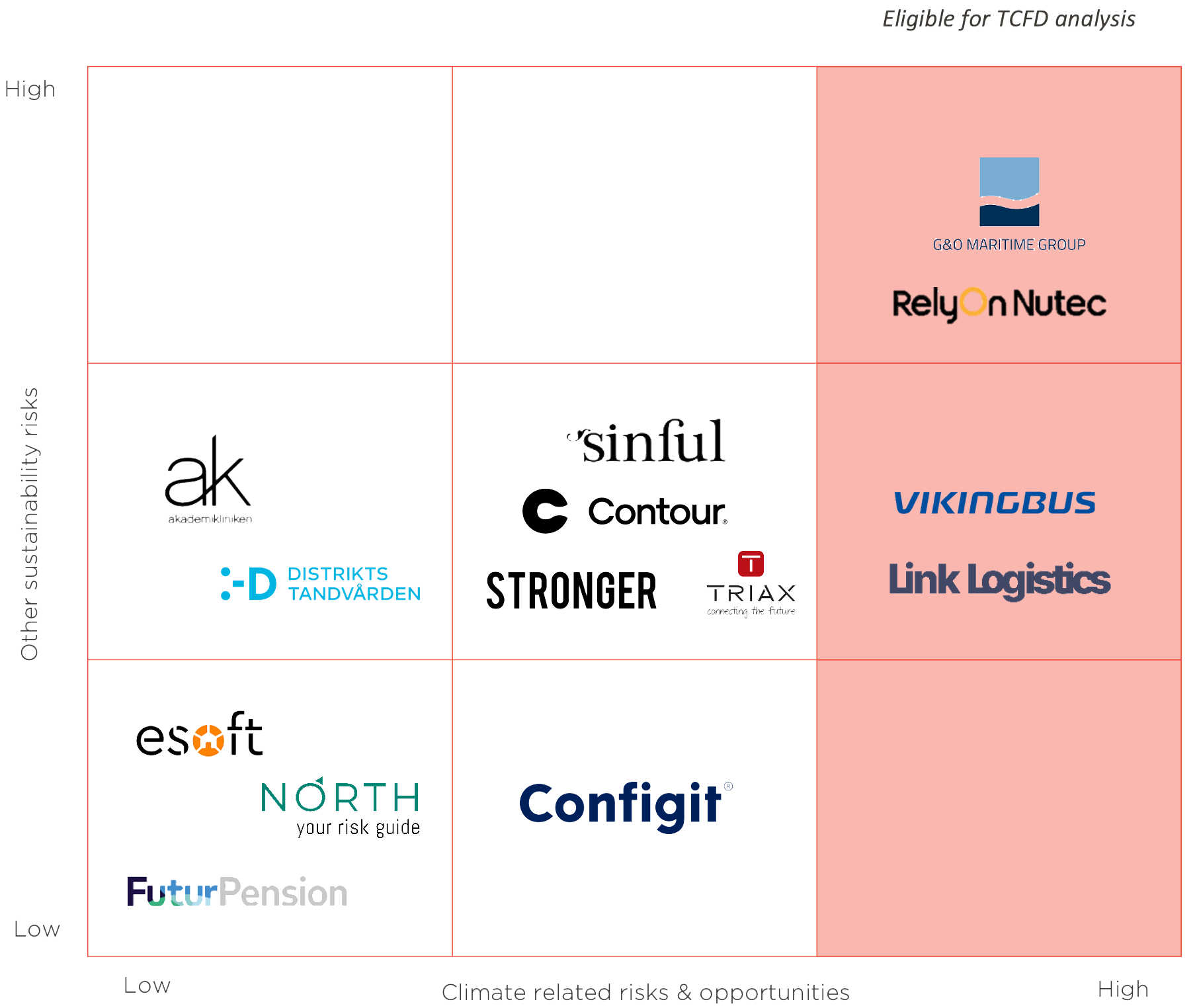
2022 was the third year where TCFD as a structured, formalized approach was introduced to our work with climate-related risks and opportunities and the work has been launched as a phased roll-out approach. To prioritize efforts we have conducted a high-level assessment of each of the portfolio companies included in this report and prioritized the companies according to estimated exposure to climate changes. The portfolio companies believed to be most exposed to climate-related risks and opportunities have been prioritized. These companies are analysed from an outside-in perspective of each of the topics in the TCFD risk and opportunity framework. The result of this high-level assessment can be seen in the TCFD prioritization matrix below where the companies initially prioritized for the TCFD analysis are to be found on the right hand side of the matrix.
Another element of our phased approach to climate-related risk and opportunity assessments is that this first step in working with TCFD has been primarily qualitative, where all topics in the risk and opportunity framework initially have been addressed and where possible supported findings with quantitative analyses have been carried out. At this first step of working with TCFD we have not carried out structured scenario analyses, but will work towards expanding our approach to further strengthen the efforts with scenarios in the coming years. For the portfolio companies that have gone through the climate risks and opportunity assessment, the process has been initiated by a high-level assessment of each risk and opportunity topic followed by a prioritization of where to conduct deep-dive analyses to increase depth of analyses and increase the transparency of the impact on the company. As part of the TCFD analyses the companies have conducted analyses of e.g. expected CO2e tax scenarios based on their calculated CO2e baselines and the carbon tax recommendations put forward by the Danish Climate Council and IMF in relation to a 1.5 and a 2 degree scenario. Following the analyses, initiatives to address the key risks and opportunities identified have been formulated. These initiatives have been prioritized and aligned with the overall strategy of the company and other organizational priorities and presented as part of the consolidated sustainability roadmap for Board approval. Each portfolio company should revisit their TCFD analysis on an annual basis to ensure continuous focus on climate-related risks and opportunities and identify any relevant changes in relation to these.
At Polaris, we have formally integrated the TCFD framework as a structured approach to assessing climate-related risks and opportunities in our due diligence process. Hence, for all investments made in Fund V, a separate assessment of the individual investment case's exposure to climate changes has been carried out in addition to the other sustainability analyses conducted in our due diligence process. This analysis is an important element of the overall sustainability assessment of the investment case and the decision foundation for the investment committee in Polaris Management.
TCFD prioritization matrix
Polaris sustainability principles define responsible business conduct
based on the UN Guiding Principles on Business and Human Rights and the OECD Guidelines for Multinational Enterprises. These Principles are the foundation for making the ten principles
of the UN Global Compact operational and constitute a global minimum standard for responsible business conduct.
Our Sustainability Principles - the Principles of Responsible Business Conduct in our private equity strategy
The ambition for all the portfolio companies in Polaris Private Equity is to align their work with the global minimum standard for responsible business conduct. This work is initiated in a 5-day onboarding process which we aim to initiate within 12 months post the closing of each acquisition as part of 'Polaris Sustainability Program'. The process generates the following content and output, which forms the basis for the formulation of the companies' sustainability strategy:
Impact Assessments/Capacity Development process (5-day onboarding)
- Introduction: Introduction to the global minimum standard for responsible business conduct
- Definition of sustainability: Introduction to the key fundamental elements of sustainability through 84 potential impact areas:
- Environmental impact - 20 areas
- Social impacts - 48 areas (human and labor rights)
- Economic impacts - 16 areas
- Policy commitment: Formulation of a sustainability policy and a formal commitment to the minimum standard for responsible business conduct
- Impact Due Diligence: Implementation of due diligence processes and completion of the first assessment including:
- Identification of potential negative impacts
- Assessment of risk levels, existing actions and additional actions to prevent or mitigate the risks identified, and indicators to measure effectiveness of actions
- Action plans: Listing of coming actions to prevent or
mitigate impacts, estimate of resources and person responsible
- Business relationships: Construction of a Code of Conduct for Business Relationships
- Grievance mechanisms: Outlining the basis for establishment of grievance mechanisms in the company
- Cloud-based tool: The documentation of the outcome and follow-up of the Impact assessments (due diligence) are managed in a dedicated cloud-based tool: SEE Impacts (by Global CSR).
The resulting sustainability policy, business relationship Code of Conduct, impact assessments as part of a management system (due diligence process and governance, action plans and grievance mechanisms) are approved by the company Board of Directors after which the company applies for membership in UN Global Compact.
Following the process, the portfolio company is also able to comply with the EU regulations that directly reference our Sustainability Principles: the SFDR, CSRD, the EU Taxonomy (Minimum Safeguards) and the upcoming CSDDD.